INFRACORP Technology for Ground& Surface Water Treatment
Engineered Clarity for Two Distinct Water Realities
At INFRACORP, we recognize that treating water from ground and surface sources is more than a technical mandate—it is a foundational responsibility for public health protection, environmental stewardship, and long-term resource resilience. Although both sources ultimately converge toward the same goal—delivering safe, palatable, regulatory-compliant water—their intrinsic characteristics demand distinct engineering strategies.
Our approach is anchored in INFRACORP Theory™, which combines deep process science, adaptive design, and future-ready technologies to ensure performance under all environmental, seasonal, and contamination conditions.


Surface Water( Dynamic, exposed, and highly variable)
Surface waters—rivers, lakes, reservoirs—interact continuously with climate, geography, and human activity. As a result, they carry elevated treatment challenges:
- High Turbidity & Suspended Solids driven by erosion, algal proliferation, and surface runoff
- Microbiological Load including bacteria, viruses, Giardia, and Cryptosporidium
- Natural Organic Matter (NOM) that forms disinfection by-products (DBPs) when chlorinated
- Rapid Seasonal Variability from storms, droughts, and algal blooms
- Industrial & Agricultural Runoff containing chemicals, pesticides, and nutrients
Surface water requires multi-barrier treatment, high pathogen inactivation, and robust resilience to variability.
Groundwater ( Stable, mineralized, and naturally filtered—yet chemically complex )
Groundwater moves through geological formations, accumulating dissolved constituents and often lacking oxygen.
Common challenges include:
- Dissolved Minerals: iron, manganese, calcium, arsenic
- Dissolved Gases: hydrogen sulfide
- Anoxic Conditions keeping metals in soluble form
- Anthropogenic Contaminants such as nitrates, solvents, and VOCs
Groundwater typically needs chemical conditioning, selective removal processes, and stability treatment to protect distribution networks.
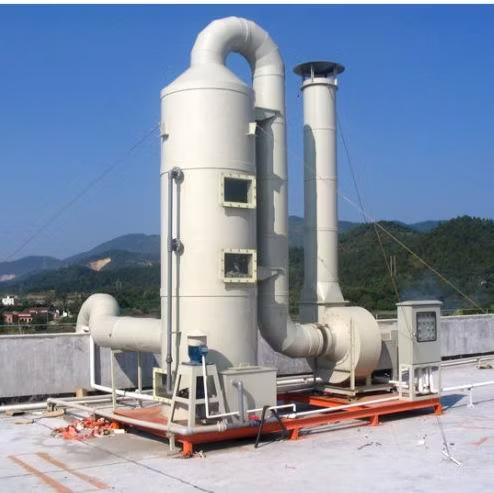
Engineering the Treatment Trains
INFRACORP designs treatment trains as system architectures—modular, scalable, and optimized for the specific contaminant profile.
Surface Water Treatment Train
Designed for particulate removal, pathogen destruction, and organic load management.
Typical process sequence:
-
- Screening – Removal of macro-debris
- Coagulation & Flocculation – Particle destabilization and aggregation
- Sedimentation – Gravitational settling of flocs
- Filtration – Granular media or membrane filtration (UF/NF)
- Disinfection – Primary and secondary barriers for pathogen control
Advanced Surface Water Controls:
- Granular Activated Carbon (GAC) for taste, odor, and organics
- Advanced Oxidation (AOP) for recalcitrant compounds
- High-barrier membranes (UF/NF/RO) for microbial safety and chemical reduction
Surface water systems must adapt quickly—INFRACORP technologies incorporate real-time monitoring, flexible coagulation control, and membrane robustness to protect communities under volatile conditions.
Groundwater Treatment Train
Focused on chemical conditioning, contaminant removal, and distribution system protection.
Typical process sequence:
-
- Aeration / Air Stripping – Oxidation of iron & manganese; removal of VOCs and gases
- Filtration – Removal of oxidized precipitates
- Softening – Lime softening or ion exchange for hardness
- Corrosion Control – pH/alkalinity adjustment for infrastructure integrity
- Disinfection – Ensuring microbiological safety
Specialized Groundwater Solutions:
- Arsenic-selective adsorption media
- Ion exchange or RO for nitrate and salinity
- GAC for VOC removal
Groundwater systems rely on precision chemistry and long-term operational stability—INFRACORP solutions emphasize reliability, minimal footprint, and operator-friendly automation.
Surface water treatment is fundamentally about removing the visible and the biological.
Groundwater treatment is primarily about removing the invisible and the dissolved.
INFRACORP’s methodology begins with a deep understanding of raw water character, followed by a treatment architecture engineered for safety, efficiency, resilience, and sustainability. By integrating advanced processes, data-driven monitoring, and adaptive design, we safeguard communities while protecting one of humanity’s most essential resources: clear, safe, and resilientwater.