Brine Mining and Salt Recovery
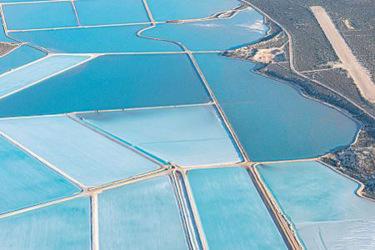
Brine mining and salt recovery are critical downstream processes following the extraction of valuable elements like lithium, potash, and other minerals from brine sources. After harvesting these target compounds, the remaining brine still holds significant value as a resource for further salt recovery and mineral extraction.
By efficiently processing this residual brine, INFRACORP enables:
- Maximized resource utilization
- Recovery of high-purity salts such as sodium chloride, potassium chloride, and magnesium sulfate
- Reduction of environmental impact through responsible brine management
- Support for circular economy principles by minimizing waste and unlocking additional revenue streams
Our advanced technologies and integrated systems ensure that every drop of brine is transformed into valuable products, driving both sustainability and profitability.
Key Minerals Recovered
- Sodium chloride (common salt)
- Lithium – Critical for batteries (especially from brine pools in “Lithium Triangle”: Chile, Argentina, Bolivia)
- Potassium (potash) – Fertilizers
- Magnesium and magnesium compounds
- Bromine – Flame retardants, drilling fluids
- Calcium chloride – De-icing, dust control
- Sodium sulfate – Detergents, paper production
What Is Brine Management?
Brine is a concentrated saline wastewater produced by:
- Seawater & brackish desalination (RO, MSF, MED)
- Geothermal power plants
- Oil & gas produced water
- Mining & industrial processes
- Lithium extraction and evaporation ponds
Management is needed because brine contains:
- High salinity (TDS up to 200,000+ mg/L)
- Heavy metals (Hg, Pb, As)
- Radioactive elements (in oil & gas PW)
- Nutrients (N, P) and organics
Valuable dissolved minerals (Li, Mg, K, B, NaCl)
By efficiently processing this residual brine, INFRACORP enables:
- Maximized resource utilization
- Recovery of high-purity salts such as sodium chloride, potassium chloride, and magnesium sulfate
- Reduction of environmental impact through responsible brine management
- Support for circular economy principles by minimizing waste and unlocking additional revenue streams
Our advanced technologies and integrated systems ensure that every drop of brine is transformed into valuable products, driving both sustainability and profitability.
Key Minerals Recovered
-
- Seawater – Largest source, containing NaCl, Mg, Br, and others
- Salt Lakes & Inland Seas (e.g., Dead Sea, Great Salt Lake) – Often have higher concentrations of specific minerals
- Subsurface Brines – Underground saltwater aquifers
- Geothermal Brines – Hot, mineral-rich waters from geothermal sources
- Industrial Byproduct Brines – Waste from desalination, produced water from oil/gas, etc
Strengths of INFRACORP’s RO-Based Approach
✔Lower energy use than thermal only systems (no phase change).
✔Modular and compact — easier to integrate into multi-stage systems.
✔Reduces burden on thermal ZLD units, cutting CAPEX/OPEX.
✔Improved scaling/fouling control with proprietary designs.
Strengths of INFRACORP’s RO-Based Approach
✔Lower energy use than thermal only systems (no phase change).
✔Modular and compact — easier to integrate into multi-stage systems.
✔Reduces burden on thermal ZLD units, cutting CAPEX/OPEX.
✔Improved scaling/fouling control with proprietary designs.
Supplementary Treatment Modules
While not strictly limited to brine, INFRACORP also integrates technologies that support efficient brine processing workflows — especially upstream of membrane concentration:
- HiSep™ Ultrafiltration: Robust pretreatment to remove solids and organics before RO stages, reducing fouling and extending membrane life.
- IonEx™ Ion Exchange: Can be applied in selective removal or recovery of specific ions from concentrated streams (e.g., lithium from brines).
These systems help ensure the feedwater quality entering brine recovery stages remains optimal, improving overall performance and lowering maintenance
Most brines containenough metal to be economically valuable; the challenge is separating itefficiently, reliably, and at scale.
With INFRACORP’s advanced treatment and separation technologies including HCRO™, HTRO CLRO™, RFRO, and HyO-RO — we are able to treat, refine, andselectively extract a wide range of minerals from complex brine streams, while maximizing water recovery and minimizing waste
Brine Mining and Salt Recovery
- Ultra-high pressure RO capable of concentrating high-TDS brine streams beyond the limits of conventional RO.
- Ideal upstream of ZLD systems to reduce volume and energy demand for later stages.
- Enhances water recovery from difficult waters like industrial brines, produced water, and mining reject streams
CLRO™ — Closed-Loop Reverse Osmosis
- Uses a closed-circuit design to maximize recovery (up to ~98%) by recirculating concentrate instead of discarding it.
- Lowers brine output and energy usage versus traditional single-pass RO, reducing the size and cost of post-treatment
HTRO™ — High-Temperature Reverse Osmosis
- Enables RO treatment of hot, chemically aggressive streams (up to ~80 °C), avoiding cooling steps.
- Extends membrane utility in industrial environments where temperature limits otherwise constrain recovery.
RFRO™ – Flow Reversal Reverse Osmosis
Flow Reversal Reverse Osmosis (FR-RO) periodically switches the saline stream flow direction in RO trains to disrupt scale/fouling formation and push recovery higher with lower concentrate volume than conventional RO
Evaporators – Brine Volume Reduction
Evaporators are used in MinZLD™ systems to concentrate high-salinity brines beyond membrane limits by removing water through phase change (evaporation).
Key Functions:
- Concentrate RO reject or high-TDS brines to near-saturation
- Recover high-quality distillate for reuse
- Significantly reduce liquid brine volume prior to crystallization
Common Technologies:
- Mechanical Vapor Recompression (MVR)
- Thermal Vapor Compression (TVC)
- Forced-circulation evaporators
Why Evaporators Matter in ZLD:
- Can handle extremely high TDS where membranes fail
- Reduce crystallizer size and operating cost
Act as the final liquid-phase concentration step
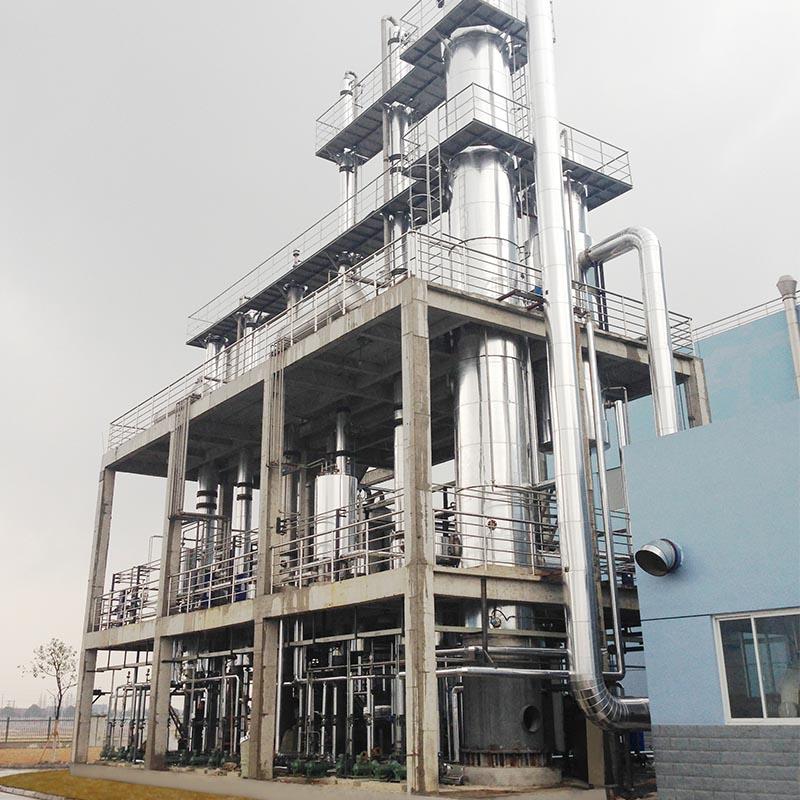
Crystallizers – Final ZLD Step
Crystallizers push concentrated brine past solubility limits to form solid salts, achieving true Zero Liquid Discharge.
Key Functions:
- Convert dissolved salts into solid crystals
- Eliminate all remaining liquid discharge
- Enable recovery or disposal of dry solids
Common Types:
- Forced-circulation crystallizers
- Draft-tube baffle (DTB) crystallizers
- Eutectic freeze crystallization (emerging)
Why Crystallizers Are Essential:
- Deliver regulatory-compliant ZLD
- Produce manageable solid waste or saleable salts
- Handle mixed-salt chemistries at saturation
INFRACORP Brine Management & Mineral Recovery Technology Table
|
Technology |
Core Function |
Role in Brine Management & Recovery |
|
HCRO™ (High-Concentration RO) |
Ultra-high-pressure membrane concentration |
Concentrates very high-TDS brines beyond conventional RO limits; significantly reduces brine volume upstream of ZLD or mineral recovery |
|
CLRO™ (Closed-Loop RO) |
Closed-circuit, high-recovery RO |
Maximizes water recovery (up to ~98%) by recirculating concentrate; minimizes brine discharge and operating costs |
|
RFRO (Reverse / Flow-Reversal RO) |
High-recovery RO with flow reversal |
Suppresses scaling and fouling at high recoveries; enables more stable continuous brine concentration with reduced cleaning frequency |
|
HyO-RO™ (Hybrid Osmotic RO) |
Hybrid osmotic / RO separation |
Extends membrane operation into ultra-high salinity ranges by leveraging osmotic gradients; enables deeper brine concentration with lower energy than thermal processes |
|
HTRO™ (High-Temperature RO) |
RO for hot, aggressive feeds |
Treats elevated-temperature brines without cooling, expanding membrane use in industrial environments |
|
IonEx™ / Selective Separation |
Ion exchange / selective recovery |
Enables targeted extraction of specific minerals (e.g., lithium, magnesium, boron) from concentrated brines |
|
Thermal Evaporators / MVR |
Phase-change concentration |
Final volume reduction when membranes reach limits; prepares brine for crystallization |
|
Crystallizers |
Salt crystallization |
Produces solid salts for full ZLD and final mineral recovery |
Why Choose INFRACORP

Cost Optimization
INFRACORP designs solutions that minimize CAPEX and OPEX through smart process integration, energy-efficient systems, and optimized recovery—delivering the lowest lifecycle cost for water and wastewater treatment projects.

Seamless Integration &Flexibility
Our modular, technology-agnostic platforms integrate effortlessly with existing infrastructure and adapt to changing feedwater quality, capacity expansion, and regulatory requirements.
High-Purity & Versatile Output
INFRACORP technologies consistently deliver high-purity water and resource recovery streams suitable for industrial reuse, potable applications, zero liquid discharge (ZLD), and specialty process needs.

Environmental Stewardship
We go beyond compliance—reducing brine discharge, lowering carbon footprint, enabling water reuse, and supporting circular water economies through sustainable, future-ready designs.
With decades of experience in brine management, high-recovery water treatment, and selective mineral separation, INFRACORP delivers proven, integrated solutions that convert complex brines into recovered water, extracted minerals, and compliant ZLD outcomes. Our membrane-first, recovery-driven approach consistently lowers energy demand, reduces waste, and improves project economics across industrial and resource recovery applications.